
Contents
- Pass on, sell, upcycle or recycle: what comes first?
- Where can you donate teddy bears in Ireland?
- What state should a teddy be in before you donate it?
- Is it worth selling old teddies?
- What can you make from an old teddy?
- Can teddies go in a clothes bank?
- How can you help a child give away teddies?
- Frequently asked questions about donating and recycling teddies in Ireland
- Sources
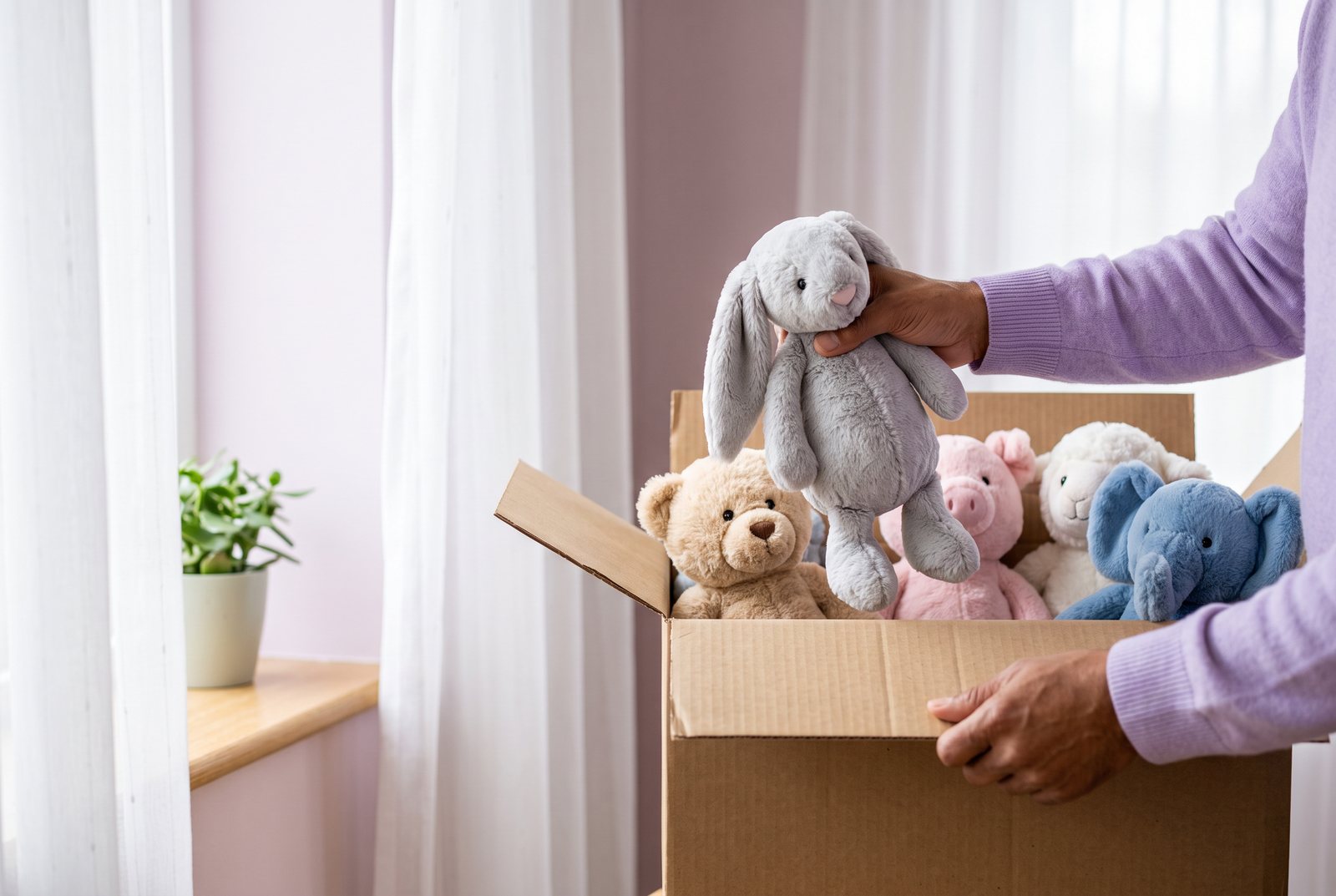
Where to donate teddy bears in good condition? Family and neighbours, local community groups, charity shops that take toys with their CE label, crèches or preschools that ask for them, and Christmas toy appeals are all worth a call. Worn ones belong in a clothing bank: mywaste.ie lists plush toys as textiles. Wash them first, and ask before you go, because each place sets its own rules.
Every Irish house seems to have the same bag of teddies on top of the wardrobe. Most of them can still make another child happy, and the rest have a better destination than the black bin. Here is the order that gives each one the longest life.
Pass on, sell, upcycle or recycle: what comes first?
Begin with whatever keeps the teddy in use the longest. A review of 41 studies on textiles found strong support for reuse and recycling both lowering environmental impact compared with incineration or landfill, with reuse doing better than recycling (Sandin and Peters, 2018). Only 41% of those studies looked at reuse, against 85% for recycling. The authors also point out that the gain disappears if people make long car journeys to drop off one bag, which matters outside the towns, where the nearest bank can be a drive away.
From the best option to the last
Teddies with electronics are the weak link. In January 2026, WEEE Ireland reported that only half of the household batteries sold on the Irish market come back for recycling each year, and that about 40% of the year’s small electronic gifts and toys are bought in the festive season, while just 30% of them are returned for recycling. A musical teddy forgotten in a drawer is part of that figure.
Where can you donate teddy bears in Ireland?
Each place has its own rules. The table gives what is usually accepted, and the question to ask before you load the car.
| Who to give to | What is usually accepted | What to check first |
|---|---|---|
| Family, neighbours, local community and parish groups | Any clean teddy in good condition | That someone actually wants it |
| Charity shops | Clean toys in good condition, often only with the CE label still attached; some shops take no soft toys at all | The policy of that shop, which can differ from the next town |
| Christmas toy appeals | Toys in good condition or new, depending on the appeal | The dates, usually from November to just before Christmas |
| Crèches, preschools, Montessori groups, toy libraries | Depends on their needs, often very few soft toys | Their hygiene rules, sometimes new only |
| Children’s hospitals | After agreement, nearly always new toys | The ward or the hospital charity |
| Clothing banks and civic amenity sites | Plush toys, as textiles, including worn ones | The sign on the bank, and that it is not full |
A quick call saves a wasted journey. A crèche that was handed thirty teddies last month will not want more, while a community group a few roads away may be short of them for its Christmas hampers.
Do charity shops in Ireland take teddies?
Some do, some do not. A shop that resells a toy has to respect the same toy safety rules as any retailer: the Competition and Consumer Protection Commission (CCPC), which polices toy safety in Ireland, says toys sold here should carry the CE mark. That is why many charity shops ask for the sewn-in label to be intact, and why a few refuse soft toys or electrical toys altogether. Keep the label on, and ask at the counter before you hand over a full bag.
What state should a teddy be in before you donate it?
Ask yourself whether you would give it to a niece or nephew. Clean, complete, no smell, nothing hanging off.
Before it goes in the donation box
Good to go, once washed
- Seams closed, no stuffing poking out.
- Eyes and nose secure, nothing that comes away between two fingers.
- Fur clean and fully dry, no damp or musty smell.
- CE and care label still sewn in and readable.
Not yet, or not without a repair
- Beads or pellets leaking from a seam.
- An eye hanging loose, a button half off.
- Mould spots, or a smell that comes back after a wash.
- A battery box that leaks or is stuck shut.
Wash each teddy as its care label allows, then let it dry right through, which can take longer than you think in an Irish winter: our guide on washing a stuffed toy covers each type. There is a good reason for the fuss. In a paediatric intensive care unit, 85% of the toys tested, brought in by families or supplied by the hospital, carried live bacteria (Fleming and Randle, 2006). Anyone who passes toys on to vulnerable children has to be careful.
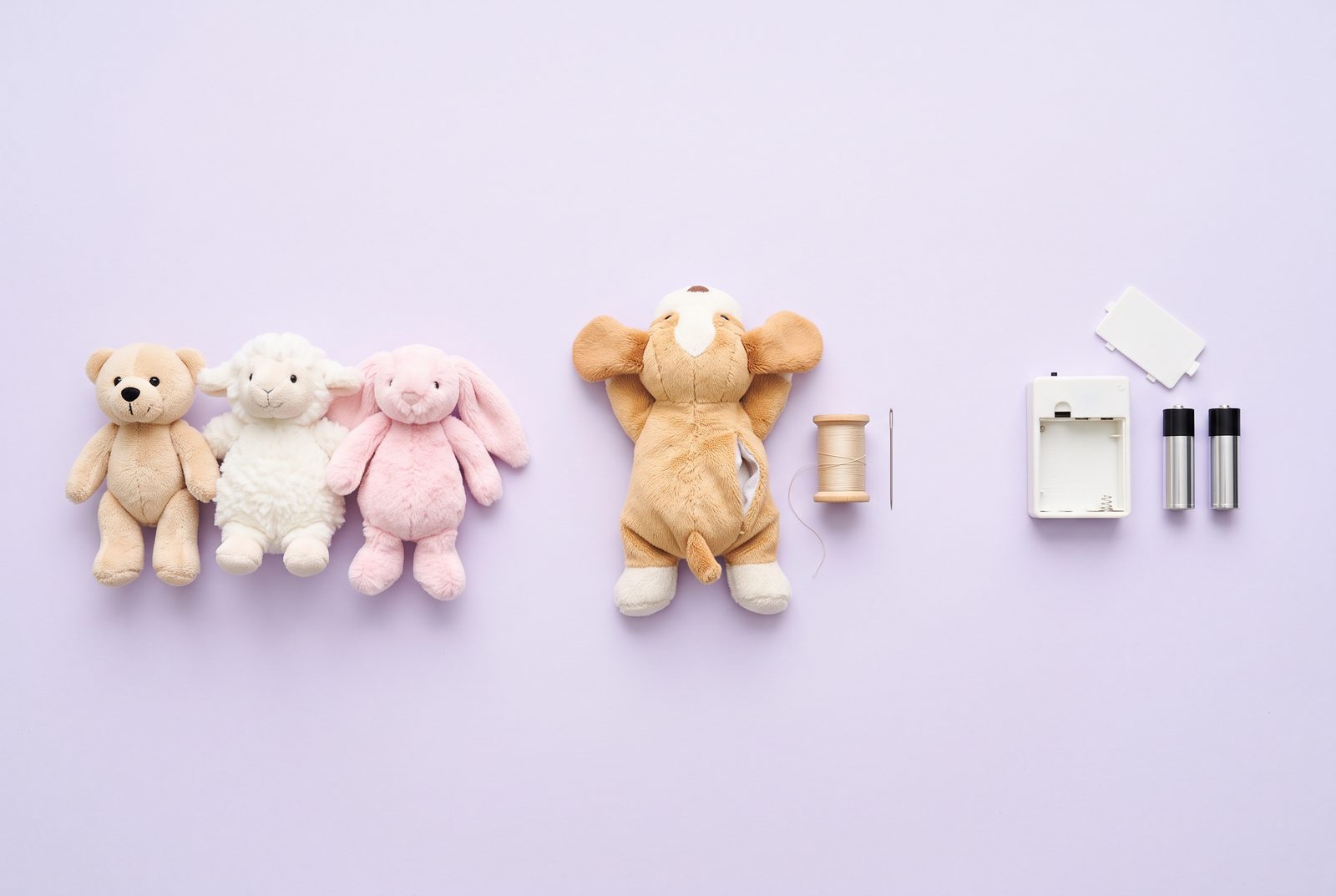
A split seam or a loose eye takes about 10 minutes with a needle and thread: our advice on repairing a stuffed toy shows the stitches that last. Take the batteries out of musical or light-up teddies and mention it on the box.
Use a clean cardboard box or a cloth bag rather than a black sack, which looks like rubbish once it is left at a door.
Is it worth selling old teddies?
It can be, and selling is reuse too. Car boot sales and school or parish fundraising sales are the simplest way to move a box of ordinary teddies at a low price. Community buy-and-sell groups suit bundles better than single toys, since postage can cost more than the toy.
Keep back anything that might be valuable: an old mohair bear, a teddy from before the 1970s with a maker’s button or label, a collector’s piece. Condition and history set their price. Do not put them in water before someone who knows old bears has seen them, and use our method to clean an old teddy bear safely.
What can you make from an old teddy?
Some teddies carry too many memories to leave the house, or are too worn to be given away. They can still have a use.
A keepsake that stays whole
A small teddy can sit in a deep box frame against coloured card, held with a few stitches instead of glue so it can be taken out again. A tiny one becomes a keyring or a school bag charm, with a ring stitched into a strong seam. A group of teddies from one childhood can also live together on a shelf in a grown-up bedroom.
A little sewing project
If you sew, the fur of a worn teddy can become a cushion cover or a square in a memory quilt alongside pieces of baby clothes. Clean, dry stuffing can top up a flat cushion. One damaged teddy can even be patched with fabric from another.
If your child would rather keep the lot, that is fine too, as long as they are kept well: our ideas on storing stuffed animals explain how to keep them clean and protected for years.
Can teddies go in a clothes bank?
Yes. On mywaste.ie, the official waste information site of Ireland’s local authorities, plush toys are classed as textiles that should be placed in a clothing bank. They do not go in your recycling bin, which is for dry packaging and paper, and mywaste.ie asks that textiles are never put there. Since 1 January 2025, EU rules have required every member state, Ireland included, to collect used textiles separately, and the bank network is how that works here.
Banks are run by commercial collectors on public or private land, and many civic amenity sites have one too. The Textiles Reuse and Recycling Map on mywaste.ie shows more than 1,500 local authority and charity donation points. Bag the teddies, keep them clean and dry, put the bag right inside the bank, and never leave it beside a full one: that counts as illegal dumping, and local authorities may use CCTV at bring bank sites.
local authority and charity donation points for textiles are listed on the mywaste.ie reuse and recycling map, and plush toys count as textiles.
mywaste.ie, the local authorities’ waste information site
And musical teddies with batteries?
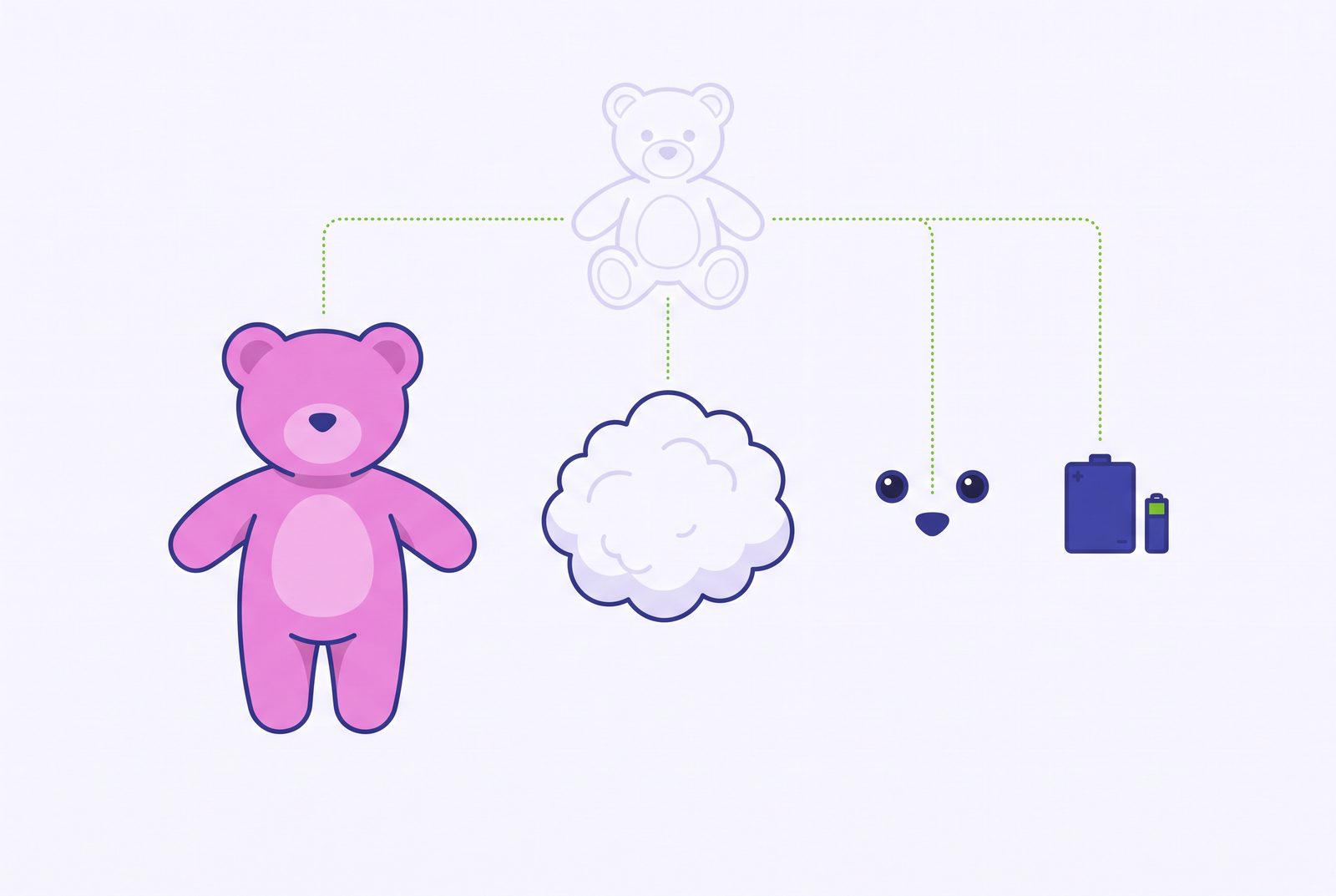
A musical teddy, a night-light toy or a breathing soft toy has a small electrical device inside. Take the batteries out first. WEEE Ireland says batteries can be returned free of charge at participating shops and at local recycling centres: most supermarkets, pharmacies and electrical shops have a battery bin, though a shop may refuse a damaged or leaking battery. If the sound box comes out, the teddy can go in a clothing bank and the box goes with small electricals. If it is sewn in for good, bring the whole toy to your civic amenity site as an electrical item.
How can you help a child give away teddies?
Never clear them out while your child is at school. A teddy that disappears in their absence is remembered far longer than the space you gained. To a young child, a comfort object cannot be swapped: in one experiment, young children were much less willing to accept a perfect copy of their attachment object than a copy of a favourite toy (Hood and Bloom, 2008). The comforter is never part of the clear-out, whatever it looks like.
For the others, let your child decide and tell them where each teddy is going: to another child, to a charity, to a second life. If they like, let them put the bag in the bank or hand it over themselves, so it becomes their decision. For the ones they cannot make up their mind about, a “maybe” box on top of the wardrobe for 3 or 4 weeks settles it. If nobody asks for a teddy in that time, it can go.
Plenty of families end up keeping one special bear per child for good. When it is time for a new favourite, a classic from our teddy bear collection is often the one that stays.
Frequently asked questions about donating and recycling teddies in Ireland
Should you throw out old teddies?
Rarely. A clean teddy in good shape can be passed on, a worn one can become a keepsake, and mywaste.ie classes plush toys as textiles that belong in a clothing bank rather than the general waste bin. The one thing that never goes in any household bin is the battery inside a musical toy.
How do you find a registered charity in Ireland to donate to?
The Charities Regulator keeps a public Register of Charities that you can search by name or registered number. A genuine toy appeal will also say plainly what it takes, where the toys go and when it collects. Your local authority’s website and mywaste.ie list the donation points closest to you.
Will a dog rescue take old soft toys?
Some rescues are glad of them, others say no, so ring before you drive out. Cut off plastic eyes and buttons, take out any bag of beads, and never hand over a toy with a battery box, since a dog can swallow small parts. A teddy that is already torn will not survive the first afternoon.
Can you donate teddies to a children’s hospital?
Only after asking the ward or the hospital’s own charity. Infection control rules mean that second-hand soft toys are usually turned down, however clean they are, and many hospitals accept only new toys in their packaging. Ask too when gifts are welcome: the weeks before Christmas are often the busiest.
Sources
Fleming K., Randle J. (2006). Toys, friend or foe? A study of infection risk in a paediatric intensive care unit. Paediatric Nursing, 18(4), 14-18. DOI: 10.7748/paed.18.4.14.s15
Hood B., Bloom P. (2008). Children prefer certain individuals over perfect duplicates. Cognition, 106(1), 455-462. DOI: 10.1016/j.cognition.2007.01.012
Sandin G., Peters G.M. (2018). Environmental impact of textile reuse and recycling, a review. Journal of Cleaner Production, 184, 353-365. DOI: 10.1016/j.jclepro.2018.02.266